


- Conservationists are calling on members of the International Union for Conservation of Nature, meeting in Abu Dhabi from October 9 to 15, 2025, to vote in favor of protecting the Congo Basin forests.
- The vote of the congressmen, expected during this period, is crucial to maintain the forest integrity of this part of the planet above 74%, to avoid irreversible damage to biodiversity.
- The IUCN's Natural Resource Governance Working Group argues that a yes vote would mean extractive industries must be geographically excluded from intact forest areas in the world's second green lung.
Mongabay
By Yannick Kenné
14 Oct 2025 Afrique
Thirty-three environmental organizations from around the world (Conservation Alliance of Kenya, Tunisian Association of Taxonomy, Senegalese Association of Friends of Nature, EcoCiencia, Fundación Ecuatoriana de Estudios Ecológicos, Cameroon Wildlife Conservation Society, etc.) warn that new oil and gas blocks announced for 2025 in several Congo Basin countries will directly encroach on protected and conserved areas, key biodiversity zones, ecologically sensitive peatlands, intact forests, and community forests, thus exacerbating existing pressures from logging, agriculture, and mining, and accelerating the risk of irreversible collapse.
They submitted an emergency motion to the amendment of the members of the World Congress of the International Union for Conservation of Nature (IUCN), which is currently taking place (9-15 October 2025), in Abu Dhabi, United Arab Emirates.
This meeting brings together representatives of governments, conservation organizations and scientists from 160 countries around the world, under the theme: "Powering Transformative Conservation."
During this congress, IUCN members are called upon to vote for the protection of intact forest areas in the Congo Basin, in order to avoid irreversible damage resulting from human activities that are harmful to biodiversity in this part of the planet, in this case mining projects in the heart of protected areas.
Harrison Nnoko, executive president of the Cameroonian NGO Ajemalebu Self Help (AJESH), which is leading the advocacy, told Mongabay in an email that “this vote is about justice and the survival, not only of ecosystems, but also of the people who depend on them.” “For those of us living in the Congo Basin, it’s about securing our water supply, our food, and our way of life.”
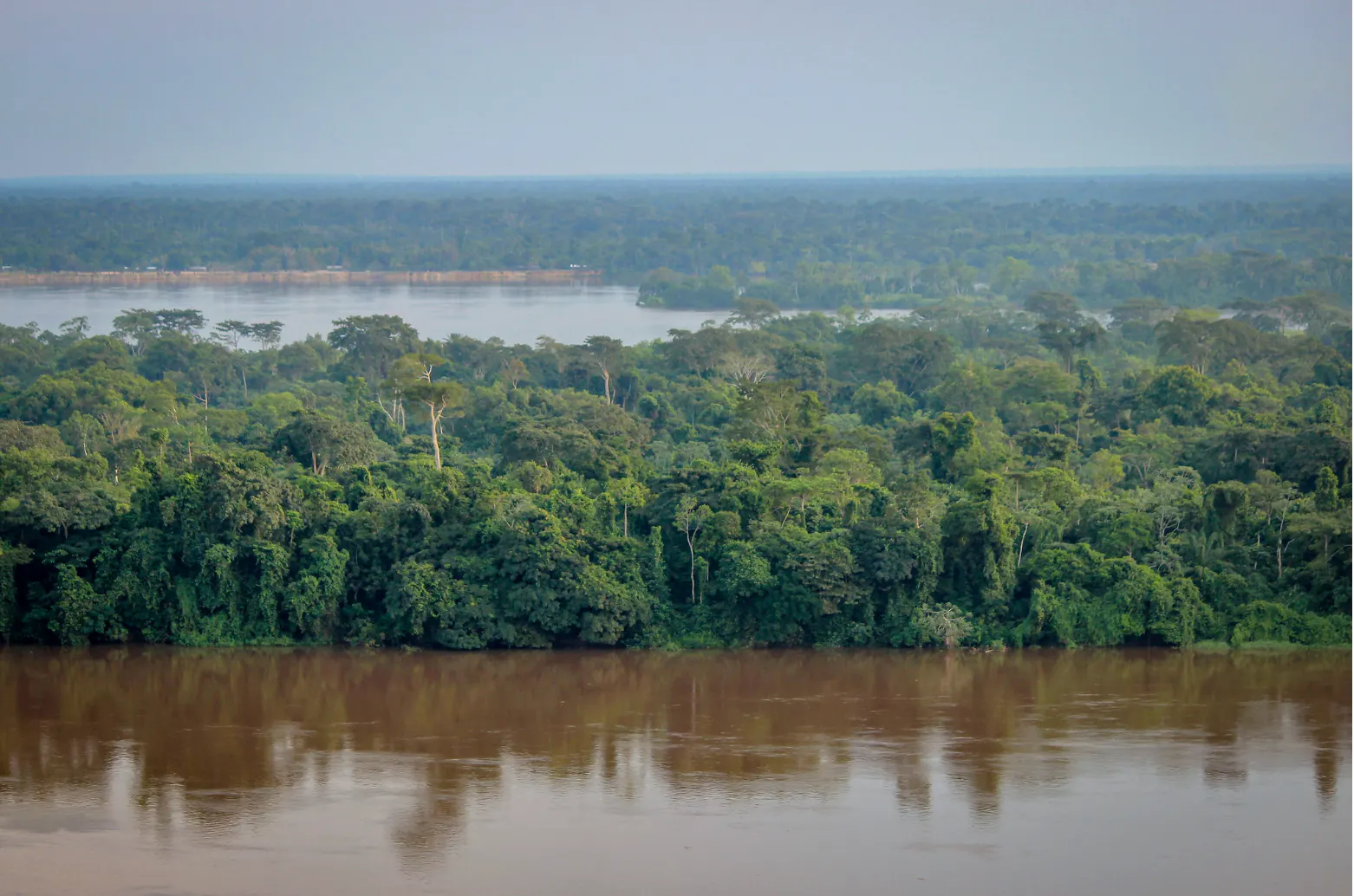
View of the banks of the Congo River at the Yangambi research station in the DRC.
Image by Ahtziri Gonzalez/CIFOR via Flickr ( CC BY-NC-ND 2.0 ).
Natural resource governance expert Dr. Emmanuel Nuesiri, who also chairs the Natural Resource Governance Framework working group of the IUCN Commission on Environmental, Economic and Social Policy, said in an email to Mongabay that a favorable vote would establish urgent safeguards to prevent irreversible ecological collapse in the Congo Basin, while maintaining the critical threshold of 74 percent forest integrity for climate stability and biodiversity.
"A favorable vote would indicate that extractive industries must be geographically excluded from intact forest areas, establishing clear boundaries and making fossil fuel extraction in ecologically sensitive regions unacceptable and risky," he said.
The benefits of such a vote would thus make it possible to guarantee customary rights, territories and governance systems of local communities and indigenous peoples, thanks to direct financial support; to prevent habitat loss, preserve biodiversity corridors and avoid the extinction of certain vulnerable species, due to "savannization" and the collapse of ecosystems.
Conversely, a negative vote would allow the continued expansion of oil, gas, and mining blocks into protected areas, accelerating deforestation towards tipping points and triggering massive carbon emissions and biodiversity loss, argues Florencia Librizzi, deputy director of the American NGO Earth Insight.
“A negative outcome would mean prioritizing short-term exploitation at the expense of long-term planetary security. This would pave the way for the expansion of oil, gas, and mining activities into high-integrity ecosystems, amplifying deforestation, drought cycles, and peatland collapse,” she said in an email to Mongabay.
With Africa experiencing the highest net loss of forests in the world (3.94 million hectares per year, according to the FAO), the stakes have never been higher for the millions of people who depend on these ecosystems.
Read full article in Mongabay