


Mongabay Latam
Yvette Sierra Praeli
12 May 2026
- A study prepared by indigenous organizations from Peru and Brazil, in coordination with Earth Insight, exposes the overlap of hydrocarbon blocks, mining and timber concessions, road projects and illicit activities in the Yavari-Tapiche Territorial Corridor.
- The report includes maps created through geospatial analysis, as well as testimonies from members of the indigenous communities living in the territorial corridor.
- The study also highlights that the territorial corridor is home to the largest concentration of indigenous peoples in isolation and initial contact.
- The report highlights the participation of indigenous peoples in promoting the creation of territorial corridors as well as in the protection of peoples in isolation.
Land of the Brave Men is the name given by some indigenous groups to the territory with the most extensive contiguous virgin forests in the Amazon. This is the Yavari-Tapiche Territorial Corridor , an Amazonian area encompassing more than 16 million hectares —twice the size of Panama—located on both sides of the border between Peru and Brazil .
This territory, which is home to the largest concentration of indigenous peoples in isolation and initial contact (PIACI) , is under pressure due to threats that endanger the population that inhabits it and the entire ecosystem.
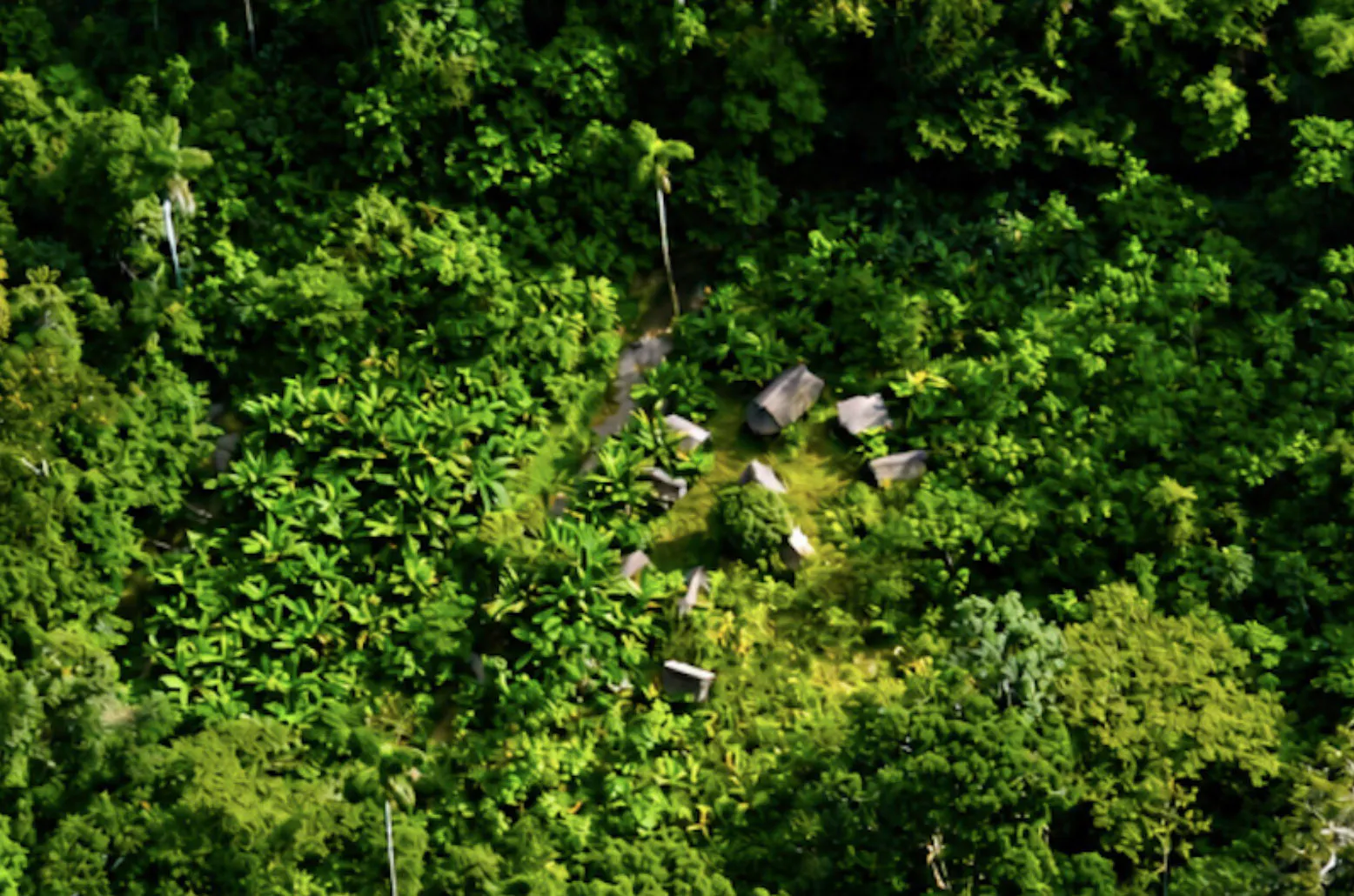
Aerial view of indigenous villages in the Amazon.
Photo: courtesy of ORPIO
“They say, ‘We’re going to have development,’ but it will be for big businesses, for large-scale agriculture, for cars and fuel: they’ll have it. We’ll have to deal with disease, sexual exploitation, drug traffickers, and crime: that’s what we’ll have to deal with,” says Leo Chuma Teca Beso, chief of the Matsés indigenous community in Loreto, Peru, for the study Vanishing Footprints: The Race to Protect Indigenous Peoples in Isolation in the Amazon , published on Wednesday, May 6, 2026.
This research has documented these threats through geospatial analysis and direct testimonies from communities located along the territorial corridor . The analysis reveals the presence of oil and gas concessions, illegal logging, illegal mining, and the expansion of road infrastructure that overlap with this Amazonian territory . It also exposes the pressures that threaten the Indigenous peoples living in the corridor. Another relevant finding of the study concerns the large volumes of carbon stored in its forests.
The study was a joint effort by the Regional Organization of Indigenous Peoples of the East (ORPIO), the Coordinator of Indigenous Organizations of the Brazilian Amazon (COIAB), the Interethnic Association for the Development of the Peruvian Rainforest (AIDESEP), and Earth Insight, an organization that promotes initiatives to restrict threats to key ecosystems and indigenous communities.
Read more | Peru will divide an indigenous community and two protected areas to build a road to Colombia
Mapping of the Yavarí-Tapiche corridor
“We wanted to highlight the importance of protecting the corridor, so we sought to show the threats, both legal and illegal,” says Edith Espejo, program director at Earth Insight, in conversation with Mongabay Latam.
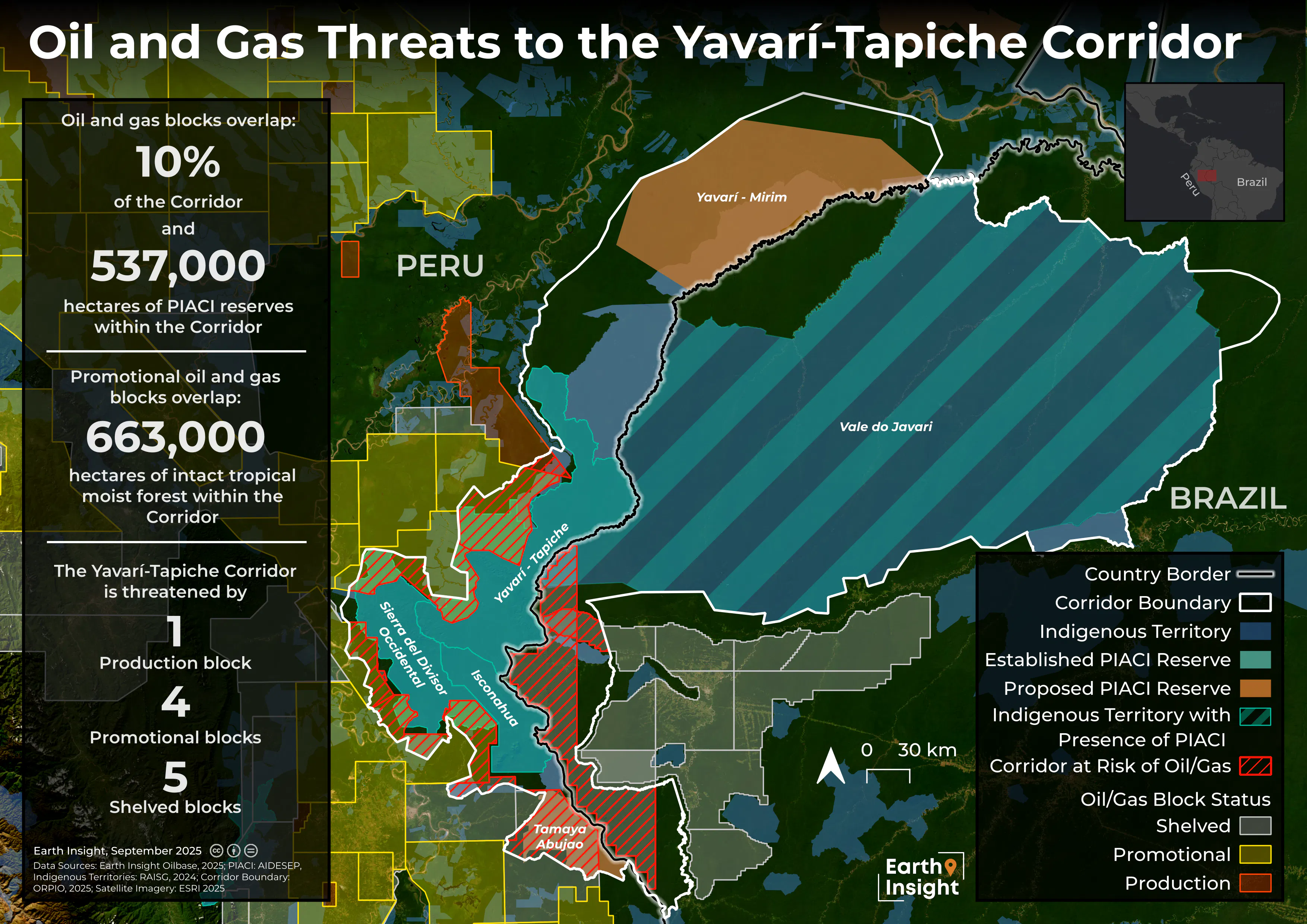
Espejo also explained that a report was produced in 2023 on oil and gas blocks that overlap with Indigenous reserves and protected areas within the territorial corridor. Following this report, the Indigenous organizations AIDESEP and ORPIO from Peru and COIAB from Brazil coordinated with Earth Insight to create a map that includes all threats in the Yavari-Tapiche territorial corridor. “Much of the work we do usually comes from requests from Indigenous groups who want to map specific extractive threats in their territories.”
The territorial corridor encompasses the border states of Amazonas and Acre in Brazil, and the departments of Loreto and Ucayali in Peru . Ninety percent of the forests within the corridor on the Brazilian side are under some form of protection, while the Peruvian side consists of national parks and protected areas that overlap with indigenous reserves.