FOR IMMEDIATE RELEASE: Oct. 8, 2026
CONTACT: press@earth-insight.org
World’s Most Important Tropical Ecosystems Threatened by Oil, Gas and Mining, Says New Report Ahead of UN Biodiversity Conference (COP17)
Groups Call for “High Integrity” 30x30 Implementation After Spatial Analysis Finds Protected Areas Overlap with 62 Million Hectares of Oil & Gas Blocks and 43 Million Hectares of Mining Concessions
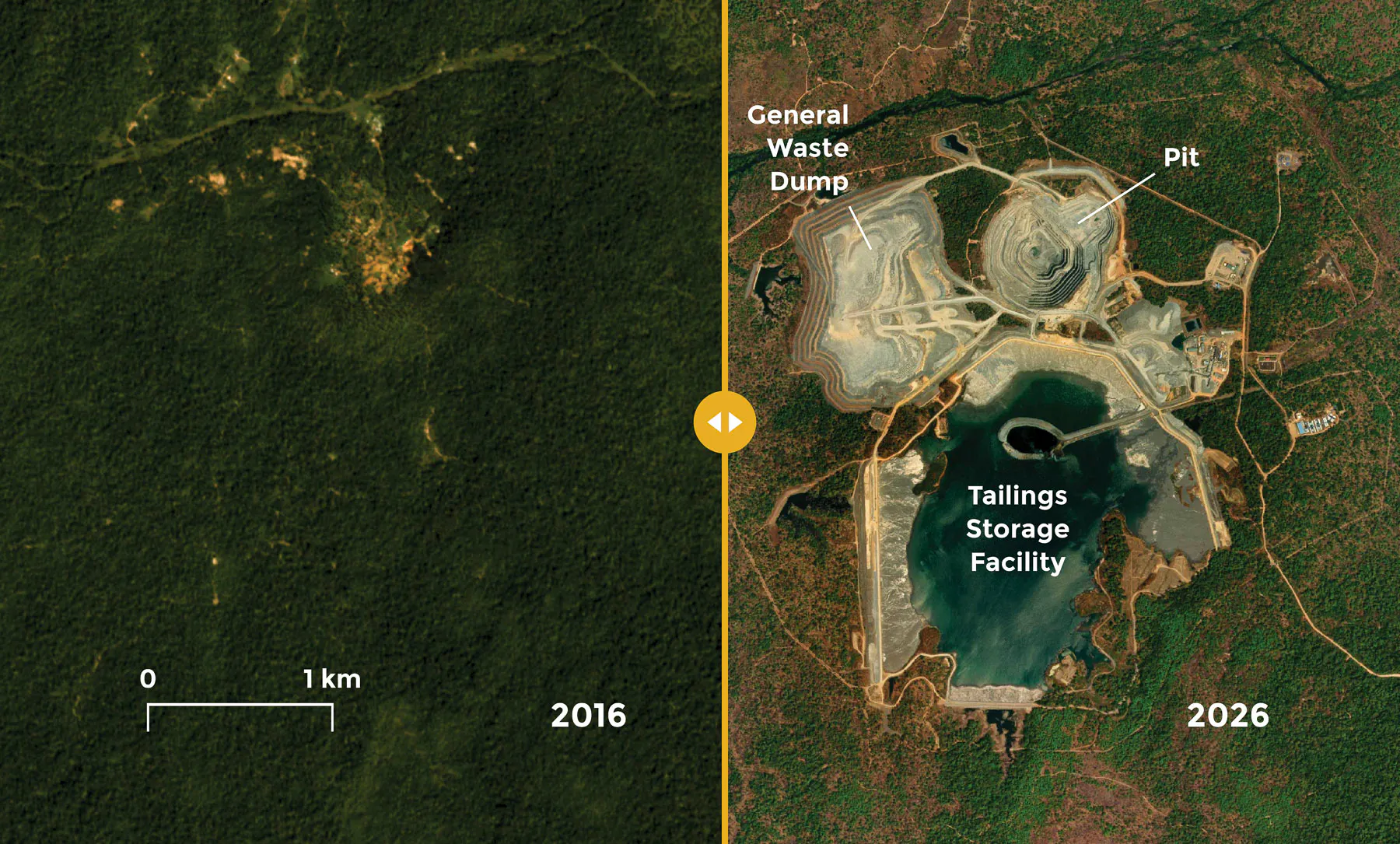
A new report released today by Earth Insight, the World Commission on Protected Areas, and partners argues that the success of the global 30x30 target must be measured by the quality of what is protected, not simply by the number of hectares counted. High-Integrity 30x30 Implementation: Industrial Threats and Promising Pathways for Effective and Rights-Based Biodiversity Conservation draws on pan-tropical spatial analysis and case studies from around the world to reveal an alarming overlap between large-scale extractive and industrial activity (such as oil and gas development and mining) and the ecosystems most critical to biodiversity. The report also describes concrete pathways toward high-integrity implementation, along with successful case studies. Downloadable maps from the report demonstrating these threats and solutions can be found here. Other report partners include: Key Biodiversity Areas Secretariat, Global Alliance of Territorial Communities, International Indigenous Forum on Biodiversity, and Campaign for Nature.
The report arrives just ahead of the Seventeenth meeting of the Conference of the Parties to the Convention on Biological Diversity (COP17), taking place in Yerevan, Armenia, from October 18 - 30, 2026, where Parties will assess whether the world is on track to meet the 30x30 target, which commits countries to effectively conserve and manage at least 30 percent of the world's land, inland waters, and coastal and marine areas by 2030, with priority given to areas of particular importance for biodiversity. So far, national commitments are on track to reach only about 23 percent, which will not achieve the goals of safeguarding the ecosystems that people and other species depend on.
Key Findings:
- Nearly 62 million hectares of protected and conserved areas, roughly 2.5 times the size of the United Kingdom, are overlapped by oil and gas blocks across the tropical countries analyzed, with a further 43 million hectares overlapped by mining concessions.
- Over 40 percent of identified terrestrial Key Biodiversity Areas in the Amazon remain unprotected, alongside 29 percent in the Congo Basin and more than 50 percent in both Southeast Asia and Central America.
- Across the four regions, 91 Mha of identified marine Key Biodiversity Areas remain outside of protected areas and 19% are threatened by oil and gas blocks.
- Unprotected Key Biodiversity Areas are particularly vulnerable to extractive industrial activity – over 19% of terrestrial areas identified as KBAs that are outside of conservation management are threatened by oil and gas blocks, and 15% are threatened by mining concessions.
- In Cambodia, 97 percent of the country's remaining undisturbed tropical forest sits within protected areas, yet 21 percent of those areas are threatened by mining concessions and 71 percent by oil and gas.
- In Western Australia, 30 percent of identified terrestrial KBAs remain unprotected, and mining concessions overlap with 14.6 million hectares, or 26%, of high biodiversity and ecological representativeness areas.
The findings likely represent a conservative estimate, as they do not capture the full range of pressures on 30x30 sites, including industrial logging, large-scale agriculture, infrastructure corridors, and illegal activity.
Promising Pathways
Alongside the threats, the report identifies concrete pathways toward high-integrity implementation. Legal exclusion of extractive activity from conservation areas, rights-based governance, and cross-sector policy alignment emerge as powerful levers for closing the integrity gap. The report points to recent momentum, including:
- Colombia's 2025 commitment to prohibit new oil, gas, and large-scale mining across its entire share of the Amazon, protecting more than 48 million hectares from new large-scale extractives;
- Ghana's revocation of a regulation that permitted mining in forest reserves;
- Canada's Marine Protected Area Protection Standard;
- The Philippines' titling of Indigenous Peoples ancestral domains through Certificates of Ancestral Domain Title, which secure tenure and support rights-based stewardship of some of the country's most intact ecosystems, and
- Costa Rica's decades of investment in conservation, financing, and institutions.
Call to Action
The report calls on Parties to the Convention on Biological Diversity, along with public and private actors, to commit to high-integrity implementation of 30x30. Specifically:
- Governments should measure progress by biodiversity outcomes rather than hectares alone, avoiding "paper parks" and treating the 30 percent target as a global minimum rather than an ecological ceiling.
- There should be established and enforced geographical exclusions that keep new extractive and large-scale industrial activity out of protected and conserved areas, and review, retire, or phase out existing concessions that undermine ecological integrity.
- Expansion toward 30x30 should prioritize the places that matter most for biodiversity, beginning with Key Biodiversity Areas and intact, high-integrity ecosystems.
- Above all, governments must recognize, secure, and resource the rights, territorial governance, and traditional knowledge of Indigenous Peoples and local communities as essential partners in durable conservation.
With three years left, the report urges leaders at COP17 to keep their promises and ensure that the world's most important places for nature remain intact, connected, effectively governed, and free from the industrial pressures that threaten decades of conservation progress.
Spokesperson Quotes
Tyson Miller, Founder and Executive Director, Earth Insight: "30x30 is no longer only about protecting more places; it is about protecting the right places, in the right way. Governments cannot count hectares while losing the ecosystems those hectares were meant to protect. High-integrity implementation means keeping extractive and large-scale industrial activity out of the places that matter most—and turning conservation commitments into enforceable standards.”
Juan Carlos Jintiach Arcos, Executive Secretary, Global Alliance of Territorial Communities (GATC): "Protecting 30% of the planet can't simply mean counting hectares while our territories remain open to extraction. We, Indigenous Peoples and local communities, know how to care for these territories because we have governed and defended them for generations. 30x30 must recognize our rights, guarantee our consent, and put resources directly in the hands of those who protect these territories.”
Dr Madhu Rao, Chair, IUCN World Commission on Protected Areas (WCPA): "Target 3 calls for the effective, equitable and durable protection of the most important areas for biodiversity and ecosystem services. It is imperative that such areas are secured through appropriate policy and regulation from industrial extractive activities that are proven threats to biodiversity.”
Dr Andrew Plumptre, Head of the Key Biodiversity Area (KBA) Secretariat: "Key Biodiversity Areas are globally important sites for conservation, and these findings show how many are potentially threatened by mining and other industrial concessions. Even more concerning is that most countries are estimated to have identified only half of their KBAs on average, and so many more may be threatened that we are simply unaware of. We are calling on all countries to update their KBA networks by 2030."
Juan Carlos Navarro, Minister of Environment, Republic of Panama: "A park open to drilling and mining is just paper, not protection on the ground. A marine park open to trawling is likewise vulnerable and open to overfishing and environmental degradation. Leaders at COP17 must be bold and back their commitments with enforcement and resources, so that when the world gathers in Panama next September 2027 for the IUCN World Protected and Conserved Areas Congress, we can agree on effective, immediate and concrete conservation actions. Panama has shown that protecting nature effectively and growing an economy go hand in hand. The message is simple: protect nature now.”
Lucy Mulenkei, International Indigenous Forum on Biodiversity (IIFB) Co-Chair: “Indigenous and traditional territories are among the most important places for biodiversity on Earth, and we welcome this report's recognition of them as a distinct pathway toward the 30x30 goal. Recognition must come with respect for our collective rights, our full and effective participation in the biodiversity decision-making processes, and direct access for Indigenous Peoples and local communities to the finance needed to keep protecting these lands and biodiversity."
Brian O'Donnell, Director, Campaign for Nature: "The 30x30 Global Assessment we recently released showed that the world has real momentum toward protecting 30% of the planet. This report shows what could erode that progress. When protected areas are leased for oil drilling, mining or other industrial activities, governments are undermining the meaning and purpose of protected areas. At COP17, governments must redirect harmful subsidies, require extractive industries that profit from nature to help pay for its protection, and give protected and conserved areas the long-term funding they need to succeed."
# # #
About Earth Insight
Earth Insight builds critical transparency tools and momentum for restricting fossil fuel, mining, and other industrial expansion threats to key ecosystems and to Indigenous Peoples and local communities. Its research, communications, and engagement work support the policy interventions that key political and financial actors can make to protect critical ecosystems as a vital step toward addressing both the biodiversity and climate crises.