

FOR IMMEDIATE RELEASE: July 20, 2026
CONTACT: press@earth-insight.org / Anggia Dian Mayana diplomacy@auriga.or.id /
New Analysis Shows Deepening Threats to Biodiversity and Indigenous Peoples from Indonesia’s Wood Pellet Supply Chains
Findings Ahead of Japan–Indonesia Forest Conservation Symposium 2026: The Future of Supply Chains for Zero Deforestation Show Growing Overlap Between Biomass Haul Zones, Forests, Key Biodiversity Areas, and Indigenous Territories While Japan Consumption Increases
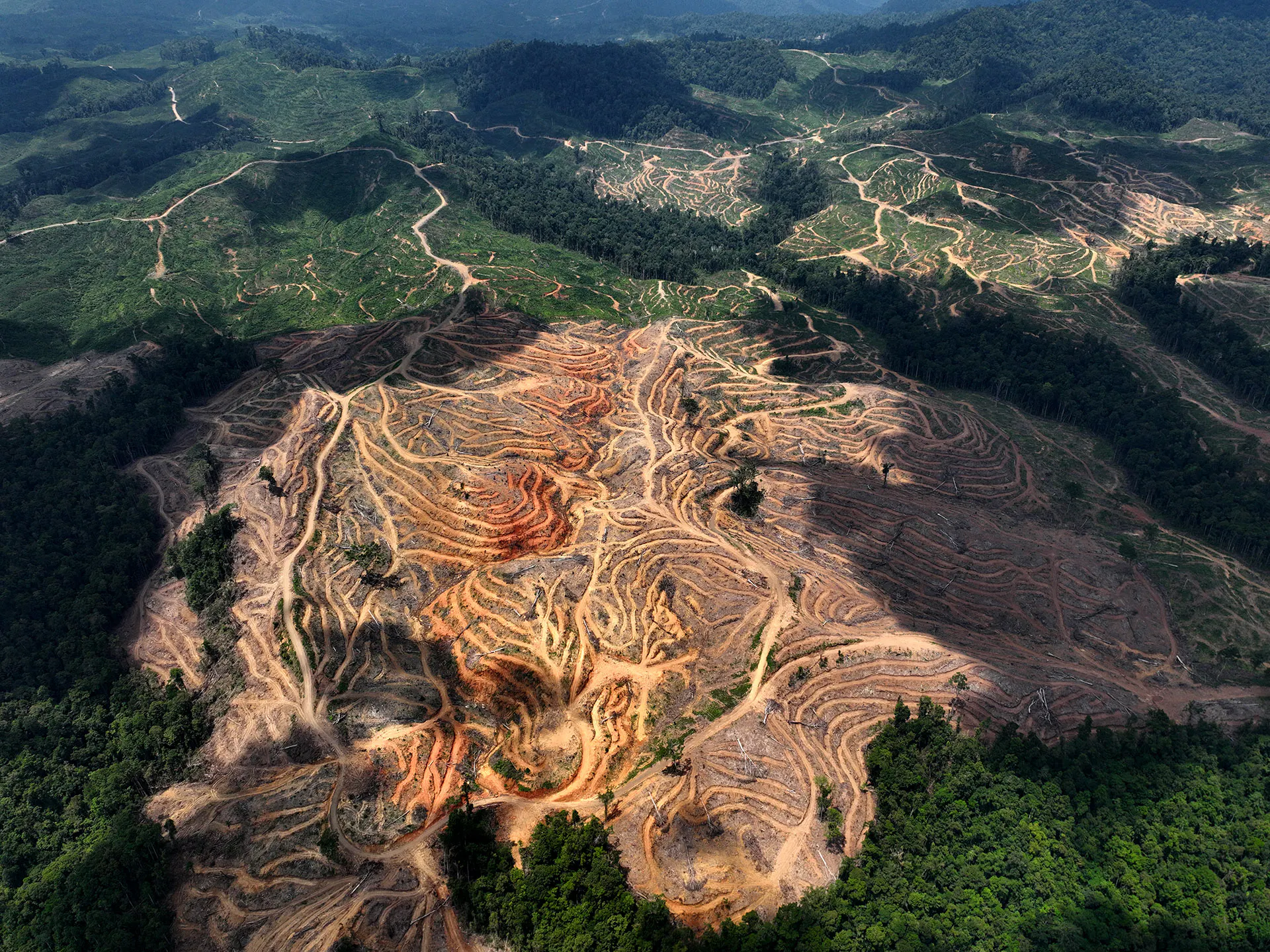
New spatial analysis released today by Earth Insight, Auriga Nusantara and AMAN demonstrates expanded deforestation linked to biomass haul zones from Indonesia's wood pellet and wood chip industry, placing further pressure on tropical forests, Key Biodiversity Areas, and Indigenous territories, including the customary forest of the Polahi, an Indigenous people living in voluntary isolation in Gorontalo, Sulawesi. Downloadable maps and supporting materials in English, Bahasa and Japanese can be found here. See the new analysis HERE.
The findings are released ahead of the Japan–Indonesia Forest Conservation Symposium 2026: The Future of Supply Chains for Zero Deforestation, to be held July 22–23 July in Tokyo, and hosted by a coalition of Japanese and Indonesian civil society organizations including Auriga Nusantara and the Global Environmental Forum (GEF) Japan. According to the Indonesian Ministry of Environment and Forestry (MoEF), in 2025, Japan accounted for nearly 75% of Indonesia’s wood pellet exports. The Symposium will bring together NGOs, researchers, companies, financial institutions, and policymakers from both countries to address deforestation and community impacts linked to pulp and paper, palm oil, and woody biomass supply chains, and to chart a path toward deforestation-free trade between Japan and Indonesia.
New findings reveal the continuing scale of the threat:
● Expanding Indigenous territory overlap across Indonesia. 347 Indigenous territories, covering more than 4.3 million hectares in Indonesia, are now threatened by chip mill haul zones.
● Forests and biodiversity areas at risk. More than 11 million hectares of total forest cover, of which over 6.9 million hectares are undisturbed, sit within the haul zones of Indonesia's chip mills. Within these zones, 43 Key Biodiversity Areas — totaling more than 2.8 million hectares — are at risk.
● Chip mill haul zones threaten critically endangered orangutan habitat. Chip mill haul zones overlap 3 million hectares of orangutan habitat, threatening the Sumatran, Tapanuli, and Bornean species.
● Indigenous Polahi people are at growing risk of displacement. The Polahi people are found within the eastern concessions linked to PT Gorontalo Panel Lestari's wood pellet facility, an area including more than 24,500 hectares of tropical moist forest. Expanded wood pellet and industrial sourcing will further endanger the Polahi Indigenous Peoples living in voluntary isolation and initial contact who depend on intact forests and ecosystems for survival.
The new analysis builds on Unheeded Warnings: Forest Biomass Threats to Tropical Forests in Indonesia and Southeast Asia, co-published in October 2024 by Earth Insight, Auriga Nusantara, Forest Watch Indonesia, Trend Asia, Solutions for Our Climate, and others, which first documented the scale of deforestation driven by wood-to-energy demand from Japan and South Korea. Two years on, the new findings show the accelerating threat of Japan’s record-breaking wood pellet imports to Indigenous Territories, intact forests, and rainforest species found nowhere else on Earth.
The report authors are calling on the Indonesian and Japanese governments, financial institutions, and biomass buyers to: (1) suspend further expansion of forest-based bioenergy and restrict wood pellet and chip mill, wood sourcing into Indigenous territories and Key Biodiversity Areas; (2) secure and respect the full recognition and protection of the customary forest of the Polahi and other Indigenous Peoples living in voluntary isolation; (3) ensure that FSC and other sustainability certifications are independently verified against on-the-ground deforestation data; (4) adopt enforceable zero-deforestation, zero-exploitation sourcing standards for wood pellets and chips entering the Japanese market, and (5) follow the lead of the South Korean government and phase out or end all harmful public subsidies for forest-based bioenergy.
Spokesperson Quotes
"Civil society groups from Indonesia and Japan are coming together in Tokyo to talk about what a genuinely deforestation-free supply chain looks like,” said Timer Manurung, Executive Director, Auriga Nusantara. “Our findings country-wide and in Gorontalo make clear why that conversation matters now: forest loss tied to Japan's wood pellet demand hasn't slowed down; it's continued even after certification. We're bringing this evidence to the Symposium to press Japanese buyers, financiers, and policymakers to commit to real zero-deforestation sourcing standards."
"Our analysis found more than 9 million hectares of undisturbed forest and 481 Indigenous territories now sitting inside the haul zones of Indonesia's wood chip mills and co-firing plants — a footprint that keeps growing,” said Tiffany Hsu, Spatial Analyst at Earth Insight. “The data is clear: carbon accounting loopholes are letting an industry call itself renewable while it drives real, measurable deforestation and community impact. Governments and financial institutions need to close those loopholes, exclude biomass from renewable energy subsidies, and require independent verification of any sustainability claims made by pellet and chip suppliers."
"Japan is already one of the largest wood pellet importers in the world, and industry projections point to Japan becoming the single largest wood pellet consumer globally. Japan has also become the largest buyer of pellets from Indonesia,” said Sayoko Iinuma, Forest Campaigner, Global Environmental Forum (GEF) Japan. “GEF Japan believes Japanese companies and financial institutions have a responsibility to know where their biomass comes from and to stop sourcing from suppliers linked to deforestation and Indigenous rights violations."
Wood Bioenergy is a False Climate Solution
Biomass power plants emit 50% – 60% more CO2 per megawatt-hour than modern coal plants. The premise that forest biomass is a renewable energy source is based on carbon accounting rules that hide full emissions. While other Southeast Asian countries, particularly Vietnam, are already exporting massive amounts of wood pellets, Indonesia’s industry is just coalescing. There is still time to consider policies that promote and provide subsidies for true low-emission climate solutions, such as wind and solar.
# # #
About Earth Insight: Earth Insight builds critical transparency tools and momentum for restricting fossil fuel, mining, and other industrial expansion threats to key ecosystems and Indigenous and local communities. Our research, communications, and engagement work are central to supporting policy interventions that key political and financial actors can make to protect critical ecosystems as a vital step toward addressing both the biodiversity and climate crises.
About Auriga Nusantara: Auriga Nusantara is an Indonesian environmental organization dedicated to protecting the country's biodiversity, forests, marine ecosystems, and communities through research, advocacy, and policy engagement. The organization works to raise critical voices against destructive forestry, oil palm, marine ecosystem, and mining practices while promoting sustainable alternatives that safeguard Indonesia's natural heritage and the rights of local and Indigenous communities.
About AMAN: Aliansi Masyarakat Adat Nusantara (AMAN), the Indigenous Peoples' Alliance of the Archipelago, is an independent Indigenous-led organization representing thousands of Indigenous communities across Indonesia. AMAN works at the local, national, and international levels to advocate for the recognition of Indigenous Peoples' rights over their Indigenous territories and resources, and to strengthen Indigenous cultural identity and self-determination for current and future generations.