

FOR IMMEDIATE RELEASE: May 6, 2026
CONTACT: press@earth-insight.org
New Report Highlights Threats to World’s Largest Concentration of Isolated Indigenous Peoples
Pressure Builds on Amazon’s 16-Million-Hectare Yavarí-Tapiche Territorial Corridor, as Peru Reverses Decades of Progress
A new report released today documents mounting threats to a proposed 16-million-hectare territory along Brazil and Peru’s western Amazon, home to the world’s largest known population of Indigenous Peoples in Voluntary Isolation and Initial Contact (PIACI). Vanishing Footprints: The Race to Protect Isolated Indigenous Peoples in the Amazon’s Yavari-Tapiche Corridor was co-authored by the Regional Organization of Indigenous Peoples of the East (ORPIO), the Coordination of Indigenous Organizations of the Brazilian Amazon (COIAB), the Interethnic Association for the Development of the Peruvian Rainforest (AIDESEP), and Earth Insight.
Geospatial analysis and firsthand testimony reveal oil and gas, logging, illegal mining, road expansion, and political persecution closing in on people who live in one of the Amazon’s largest contiguous and most biodiverse forests. Downloadable maps demonstrating these threats are available here.
Without urgent protection through the Yavarí-Tapiche Territorial Corridor, forced contact risks disease, conflict, and the collapse of the ecosystems. The corridor is an Indigenous strategy for cross-border management as well as a climate solution to conserve the ‘peak carbon’ stock of these dense forests.
Key Findings:
- Oil and gas blocks overlap 10% of the corridor, including nearly 1.7 million hectares of intact tropical moist forest, 907,000 hectares of Key Biodiversity Areas, and 713,000 hectares of Protected Areas.
- Logging concessions overlap 500,000 hectares of the Peruvian side of the corridor and intact tropical moist forest, despite legal bans against concessions in proposed PIACI reserves.
- 12% of PIACI reserves under application are at risk from oil and gas; 162,000 hectares of all PIACI reserves face direct overlap from logging concessions.
- Two proposed highways threaten to fragment the corridor. The first connects Cruzeiro do Sul in Brazil with Pucallpa in Peru and cuts directly through the Isconahua PIACI Reserve. A second would link Jenaro Herrera in Loreto with Colonia Angamos in the Yavarí River basin.
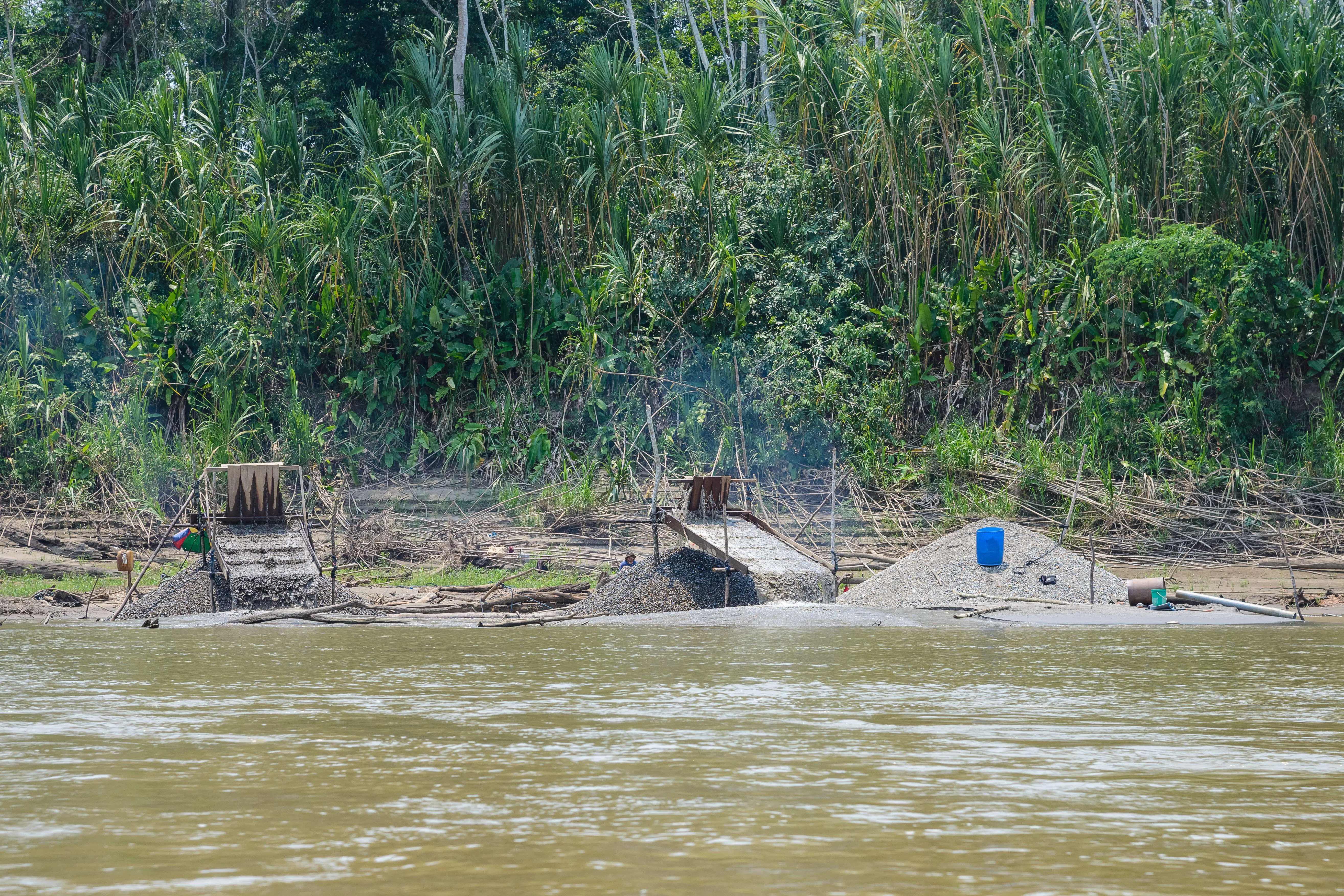
- Illegal activities, including gold mining, cross-border drug trafficking from the “Three Frontiers” region where Colombia, Peru, and Brazil intersect; illegal logging, and illegal fishing and hunting compound these threats.
- In 2025, two bills under consideration in Peru’s legislature could allow oil and gas extraction in all natural protected areas, including the 18 natural protected areas where PIACI live.
The report’s authors urge governments, donors, and international institutions to:1) create all proposed PIACI reserves in Peru; 2) remove extractive concessions from Indigenous and PIACI territories; and 3) direct long-term financing to Indigenous organizations for territorial monitoring and stewardship, as well as bi-cultural social services and education for Indigenous communities.
Quotes from the authors:
“We demand that the territories of our indigenous brothers and sisters living in isolation within the Yavari-Tapiche territorial corridor and contiguous forests be protected; that reserves be finally established; and that the inviolability of these territories be guaranteed,” said Apu Julio Cusurichi Palacios, Secretary of Asociación Interétnica de Desarrollo de la Selva Peruana (AIDESEP) and Goldman Environmental Prize winner. Protecting the territorial corridor and strengthening the neighboring communities means securing the future of the planet and of humanity.”
“Protecting Indigenous Peoples in Isolation in the Yavari–Tapiche corridor ultimately depends on the strength of Indigenous governance,” said Luiz Fernandes, Coordinator for isolated and recently contacted peoples, from the Coordination of Indigenous Organizations of the Brazilian Amazon (COIAB). “Where these systems are recognized and supported, they function as the most effective mechanism for preventing risk, coordinating territorial protection, and sustaining long-term outcomes in highly sensitive regions.”
"Our work's significance lies in generating our own knowledge to inform decisions that protect our territories," said Beltrán Sandi Tuituy, President of the Organización Regional de Pueblos Indígenas del Oriente (ORPIO). “For Indigenous Peoples, evidence-based territorial control and self-determination are essential, allowing us to analyze, share, and defend our vision for the planet's most important contiguous Amazonian territories, as a guarantee of humanity's future."
“The Indigenous Peoples living in voluntary isolation in the Yavari-Tapiche Corridor are among the most vulnerable of communities in the Amazon,” said Edith Espejo, Senior Program Manager at Earth Insight. “Real action must be taken to ensure their rights and territories are protected for their cultural survival and for future generations.”
# # #
About the Organizations
About AIDESEP: The Interethnic Association for the Development of the Peruvian Rainforest (AIDESEP) is the leading national Indigenous organization in Peru, representing more than 2,400 communities across the Peruvian Amazon.
About COIAB: The Coordination of Indigenous Organizations of the Brazilian Amazon (COIAB) is the largest Indigenous organization in Brazil, representing peoples across all nine states of the Brazilian Amazon.
About Earth Insight: Earth Insight is a nonprofit organization that combines geospatial analysis, data science, and community knowledge to reveal threats and solutions to the world’s most critical ecosystems and the peoples who protect them.
About ORPIO: The Regional Organization of Indigenous Peoples of the East (ORPIO) is an Indigenous federation that represents communities across the Loreto region of Peru and has led the decades-long campaign to establish the Yavarí-Tapiche Territorial Corridor.