

FOR IMMEDIATE RELEASE May 27, 2026
CONTACT: press@earth-insight.org
New Report Reveals Mounting Ecological Risks as East Africa's Controversial Crude Oil Pipeline Approaches Completion
Report Warns of Irreversible Harm to Freshwater Ecosystems, Local Economies, and Impacted Communities Across Uganda and Tanzania – Two Days Before TotalEnergies' Paris AGM
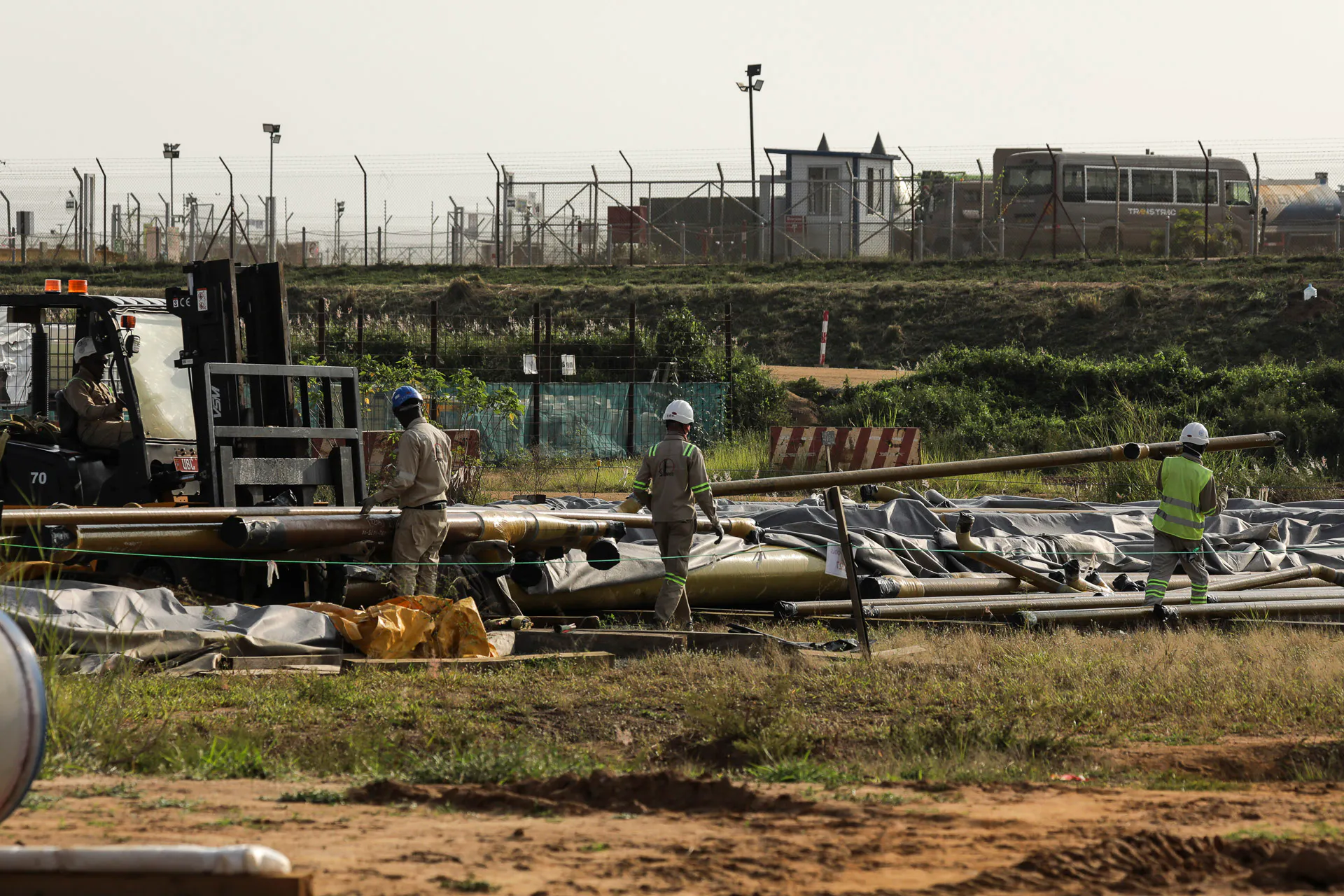
A new report released today by Earth Insight documents compounding threats to one of Africa's most vital freshwater systems as construction of the East African Crude Oil Pipeline (EACOP) reaches 80% completion. Headwaters at Risk: How EACOP's Final Stages Threaten East Africa's Freshwater Lifelines reveals that the world's longest heated crude oil pipeline — spanning 1,443 kilometers — cuts through one of Africa's most extensive, ecologically interconnected freshwater systems and has already been implicated in flash flooding, water pollution, soil dumping on community land, and the loss of local water sources across eight of ten affected districts. Downloadable maps from the new analysis can be seen here.
The report was released two days ahead of the Annual General Meeting of TotalEnergies – the project's leading international investor – in Paris on May 29. The pipeline is currently targeted for commissioning in July 2026, with first oil exports expected by October. The research signals a dire warning for the potential of generations of damage to fragile wetlands, river basins, and coastal mangroves from an unprecedented, heated pipeline.
"Tens of millions of people depend on these freshwater systems that are currently threatened,” said Juan Pablo Osornio, Engagement and Policy Director at Earth Insight. “This damage would be irreversible, but the key crossings are not yet complete. The decisions made in the coming weeks in Paris and beyond will determine whether permanent harm can still be prevented."
Key Findings and Context:
- Ecosystems at risk generate billions in annual value: Uganda's Lake Albert fisheries are valued at $100 million per year; the SAMUKA (Sango Bay–Musambwa Island–Kagera Wetland System) Ramsar Site provides at least $117 million in ecosystem services annually; Tanzania's mangroves generate some $2.1 billion a year.
- The Kibale/Bukoora River Crossing in southern Uganda threatens the SAMUKA Ramsar Site and Lake Victoria, a water resource that sustains the livelihoods of 40 million people.
- New spatial analysis shows 100% of Lake Albert could be overlapped by oil development – 60% by Uganda production blocks and 40% by currently-shelved DRC oil blocks. The proposed Kaiso Tonya project’s 47 wells along the lake pose a transboundary risk across one of East Africa's most critical freshwater systems. Plans for oil development in eastern DRC also threaten the Lake Albert basin.
- Wastewater risks escalate over time: Every barrel of oil generates three barrels of wastewater — a ratio that can triple as oilfields age. An independent review warned that a wastewater spill would spread faster than oil across Lake Albert, which supports some 100,000 households and 20,000 fishermen in the DRC..
- The pipeline could impact 158 wetlands in Uganda alone, along with 44 protected areas and 7 Key Biodiversity Areas across Uganda and Tanzania. The pipeline and its feeder network intersect with the globally significant Nile River basin , including the Victoria Nile and Lake Albert sub-basins.
- 132 of more than 400 planned oil wells under the Tilenga and Kingfisher projects could be inside Murchison Falls National Park — Uganda's last lion stronghold and a critical segment of an ancient elephant migration corridor. Pipelines cross the park’s elephant, lion, and critical species habitats. Park rangers and conservationists warn that if operations proceed as planned, Murchison Falls National Park (which generates $2 million a year from wildlife tourism) would basically become an industrial oil zoo.
- The pipeline will cross the Victoria Nile within Murchison Falls National Park, posing a threat the the Upper Nile watershed and a Ramsar Wetland of global importance that has been classified as a High Adverse Impact site.
- Heavy Carbon Burden: Over its projected 25-to-30-year operational lifetime, emissions could reach 379 million tonnes of CO2 equivalent — a carbon burden that compounds the project's financial and reputational risks at a time when most major international banks and the four largest reinsurance companies in the world have already distanced themselves from the project.
The report urges governments, financial institutions, and international bodies to act before commissioning begins by:
- Halting construction pending independent biodiversity and community impact audits;
- Applying the precautionary principle to all remaining river and wetland crossings, where the most ecologically sensitive work remains incomplete;
- Assessing EACOP's full compliance with the Agreement on the Nile River Basin Cooperative Framework;
- Ensuring fair and timely compensation covering both land loss and long-term livelihood impacts; and
- Developing transboundary fisheries management plans for both Lake Albert and Lake Victoria.
The evidence presented in this report makes clear that TotalEnergies and its partners face both legal and financial exposure that will only grow if these questions remain unresolved.
“This report exposes the brutal imbalance behind projects like EACOP: environmental destruction and long-term risks for Uganda and Tanzania, while TotalEnergies walks away with the profits,” said Laure Fourquet, Senior Campaigner at Avaaz. “As ecosystems are damaged and critical water resources threatened, French citizens’ savings are still being used to help finance the company behind it. The French government cannot justify using public savings to support fossil fuel expansion abroad while claiming to lead on climate.”
"Satellite imagery confirms that construction has reached the banks of the Kibale/Bukoora River, but the crossing itself is not yet complete,” said Katie Boston, Senior Spatial Analyst of Earth Insight. “This is one of the most ecologically sensitive points on the entire route with risks that extend far beyond the immediate project area. The river flows through a Ramsar wetland and ultimately into Lake Victoria, whose watershed sustains over 40 million people. The data shows there is still time to prevent irreversible damage and avoid placing millions of people across the Lake Victoria basin at risk."
# # #
Earth Insight is a nonprofit organization that combines geospatial analysis, data science, and community knowledge to reveal threats and solutions to the world's most critical ecosystems and the peoples who protect them.