
How EACOP’s Final Stages Threaten East Africa's Freshwater Lifelines
New spatial analysis reveals compounding risk and deepening uncertainty around the East Africa Crude Oil Pipeline. Threats to high-value ecosystems, coupled with long-term oil market uncertainties, the “carbon bomb” of emissions from a 1,443-km heated pipeline, and ongoing infrastructure, governance, and legal challenges, point to a project of escalating systemic risk.
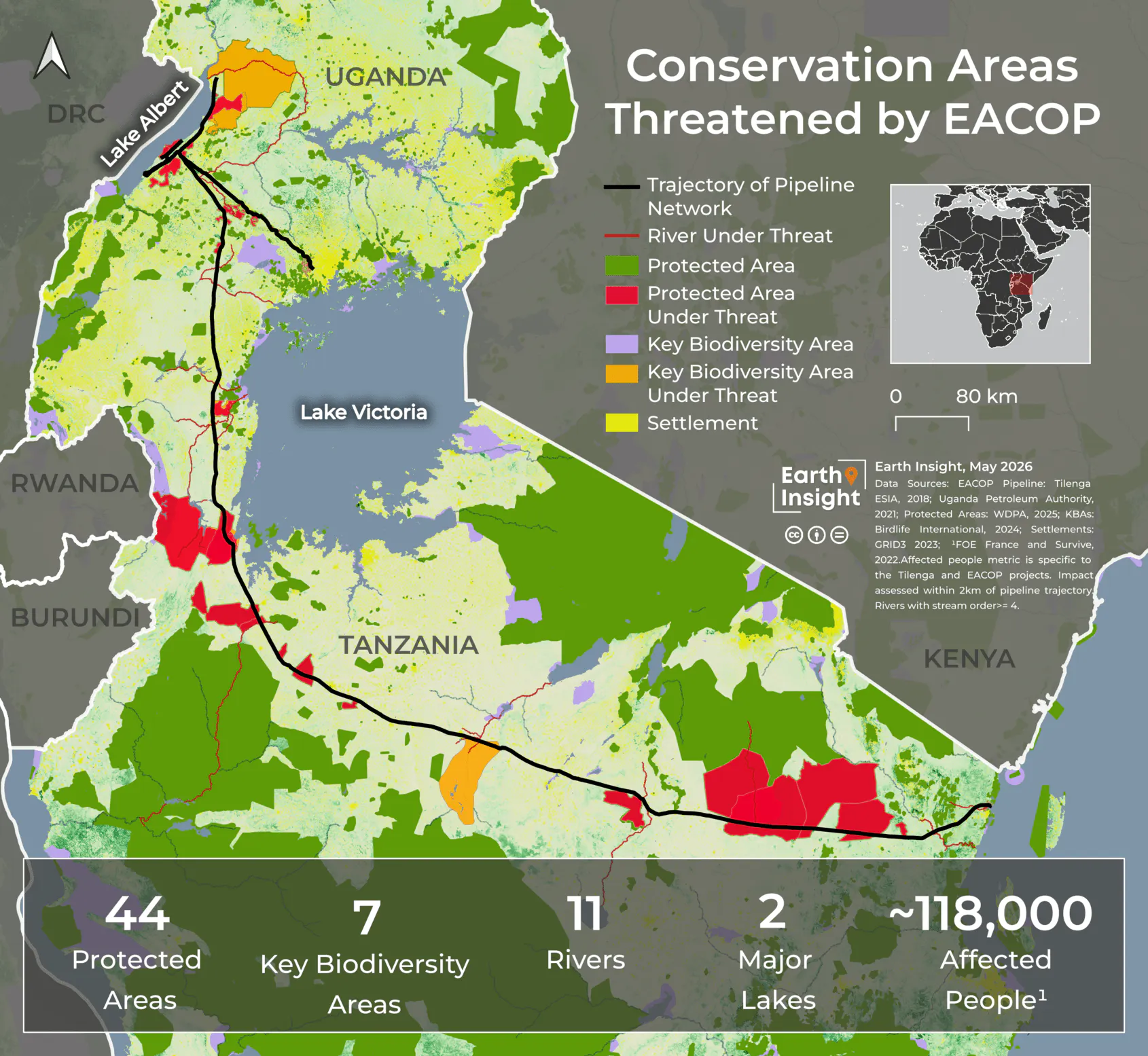
The central EACOP and related pipelines cut through one of Africa’s most extensive freshwater systems that connect the basins of lakes Albert and Victoria and end in mangroves on Tanzania’s coast. Its trajectory could impact 158 wetlands in Uganda alone, eleven rivers, 44 protected areas, and seven key biodiversity areas, along with:
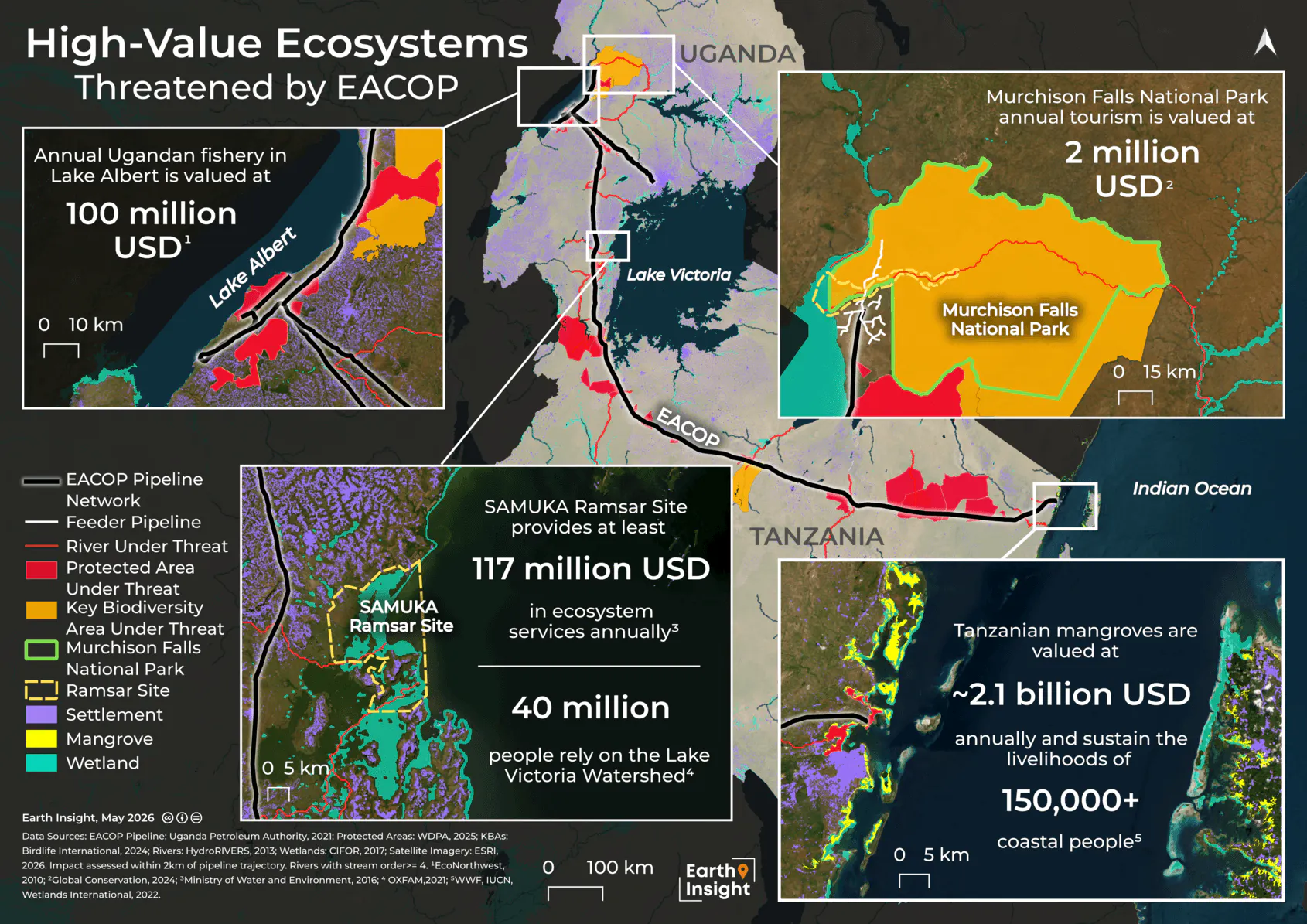
- Uganda fisheries in Lake Albert, worth $100 million a year.
- Murchison Falls National Park, worth $2 million in annual tourism revenue.
- SAMUKA Ramsar Site (transboundary with Tanzania) worth at least $117 million in ecosystem services.
- Mangroves in Tanzania, worth some $2.1 billion a year in total economic value.
New maps and spatial analysis also indicate that 100% of Lake Albert could be overlapped by oil development: 60% by Uganda production blocks and 40% by shelved DRC oil blocks. If it continues, the Kaiso Tonya Project would add an additional 47 oil wells along the lake.
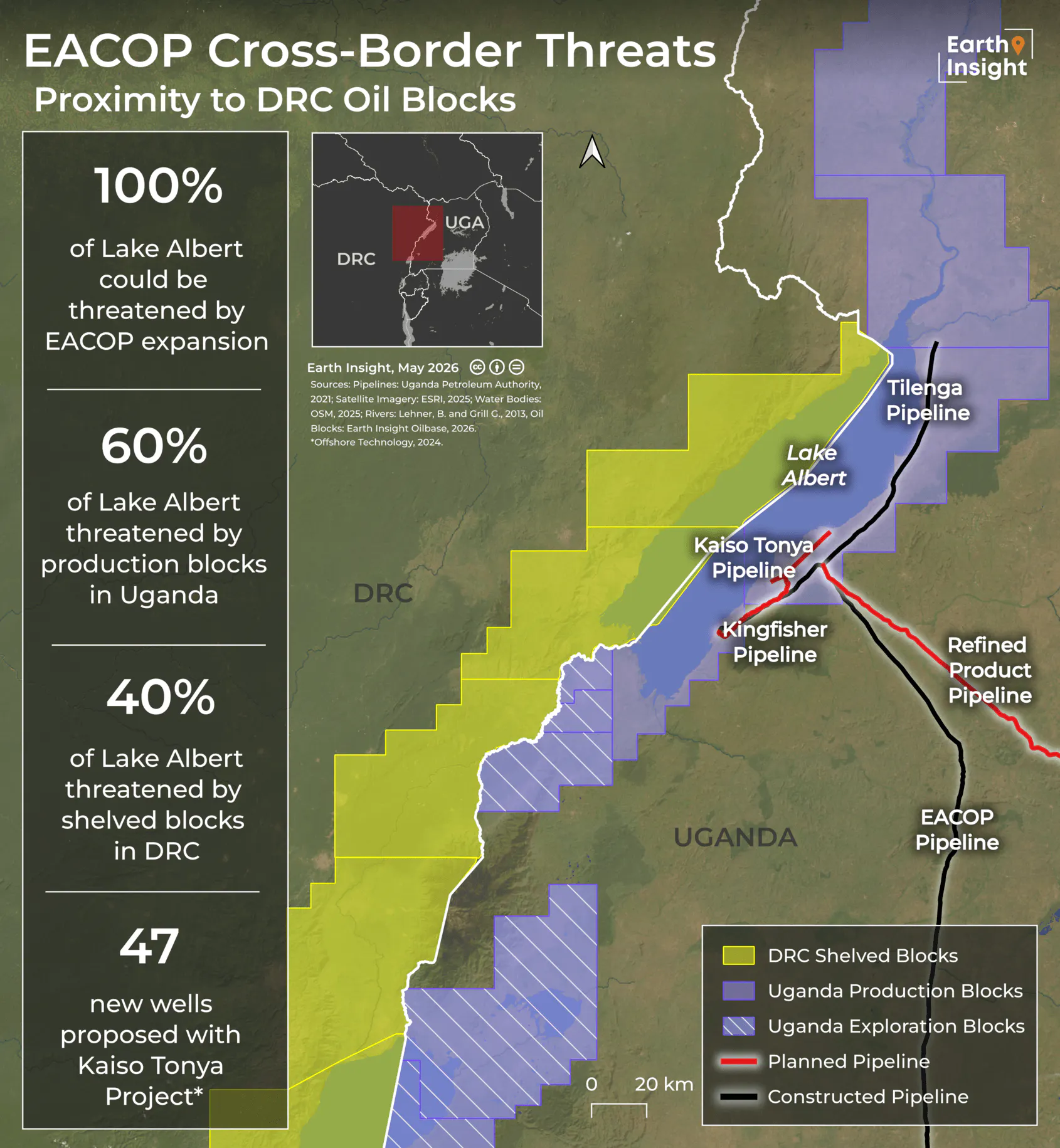
A major oil spill on Lake Albert would threaten the livelihoods of some 100,000 households and over 20,000 fishermen in the DRC alone. Lake Albert’s fishing industry makes up a third of Uganda’s production.
Two satellite images compare land-use conditions at the Victoria Nile river crossing between July 2023 and June 2026. The 2026 inset map highlights newly cleared roads and feeder paths along the riverbank, showing recent infrastructure development associated with the pipeline crossing.
.png)
Research estimates that for every barrel of oil produced, three barrels of wastewater are generated, which increases to nine barrels as oilfields age — so the risks could triple over EACOP's life cycle. An independent review of the Kingfisher pipeline project noted that a waste water spill would spread faster than oil across Lake Albert. Another estimated that the Kingfisher project alone will generate 200 metric tons a year of ‘waste oil sludge ’-- half of which could be dumped into the lake, contaminating both Ugandan and Congolese fisheries. Since the project began, Ugandan fisherfolk have reported oil slicks and dead fish floating on the lake’s surface. An independent review of the Tilenga impact assessment likewise recognized the pollution risks from waste water leaks into soil and groundwater, noting “There is no history in Uganda of successful operation of hazardous waste landfills at a standard necessary to process drilling wastes from the Tilenga Project.”
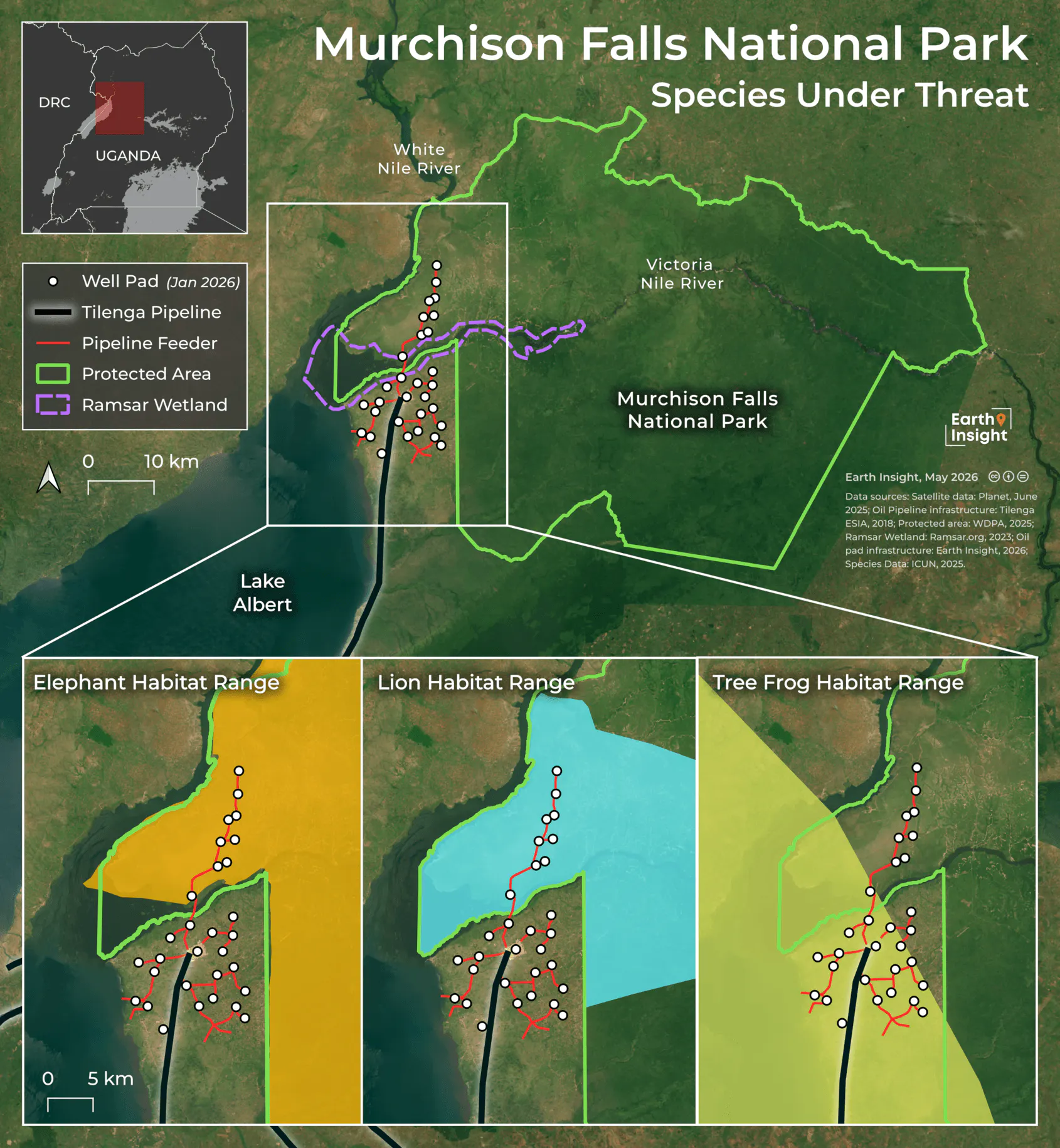
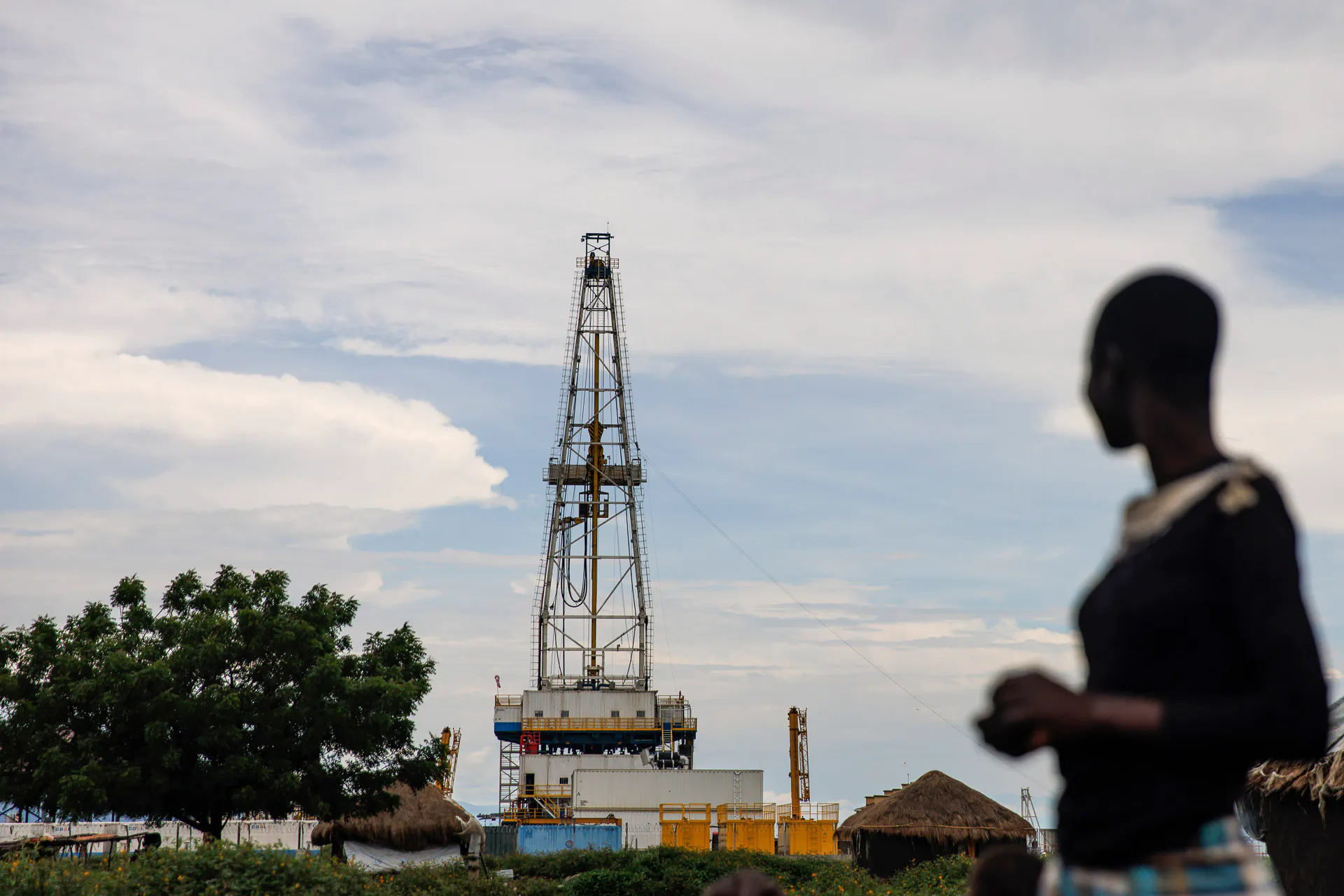
The project and its related pipelines begin along Lake Albert in the Kingfisher and Tilenga oil fields, which include 132 oil wells inside the iconic Murchison Falls National Park, Uganda’s last lion stronghold. This spatial analysis shows pipelines inside the habitat ranges of elephants, lions, and tree frogs.
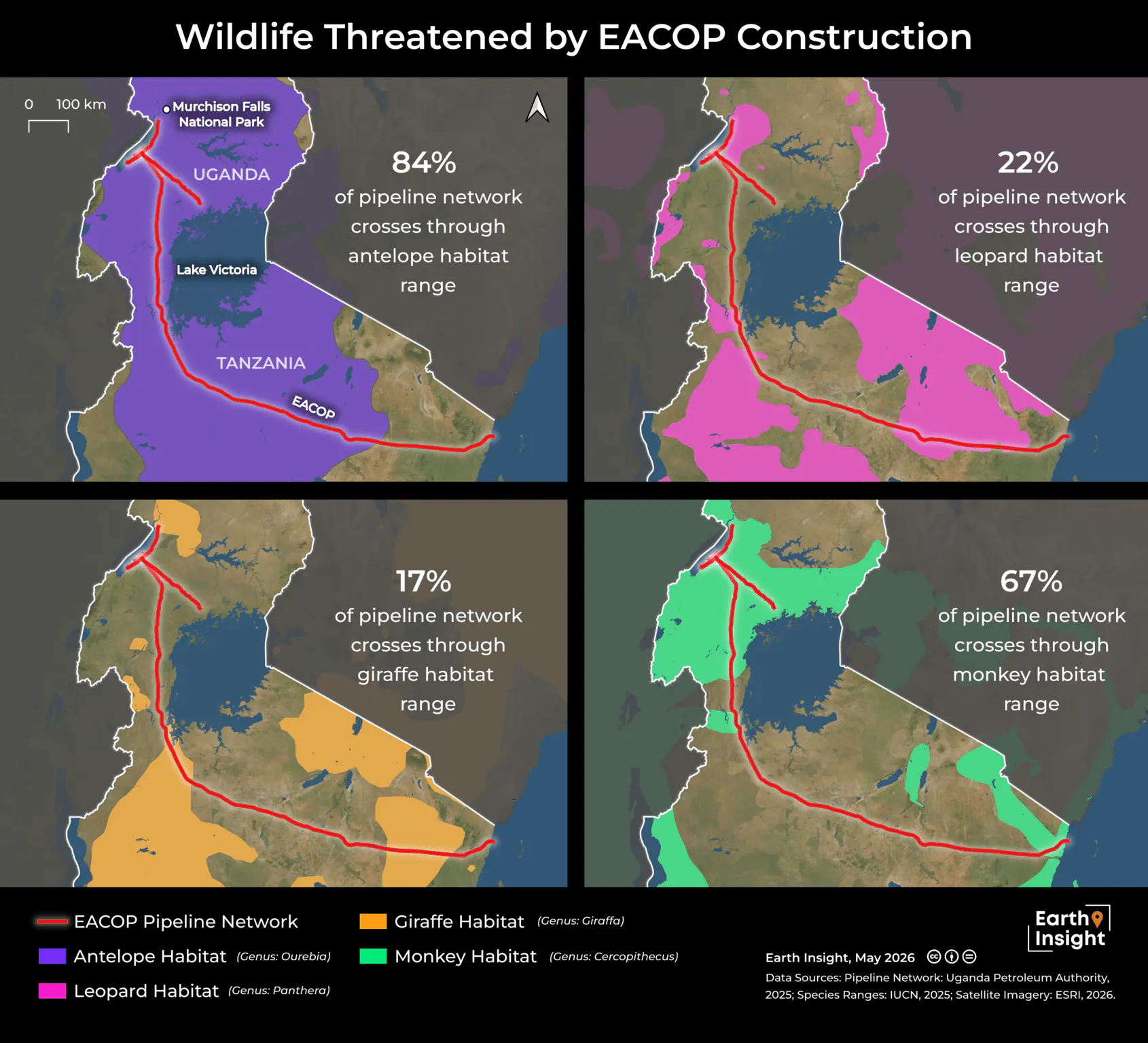
New data in this report also show:
- 84% of the pipeline network intersects with antelope habitat
- 22% intersects with leopard habitat
- 17% intersects with giraffe habitat
- 67% intersects with monkey habitat
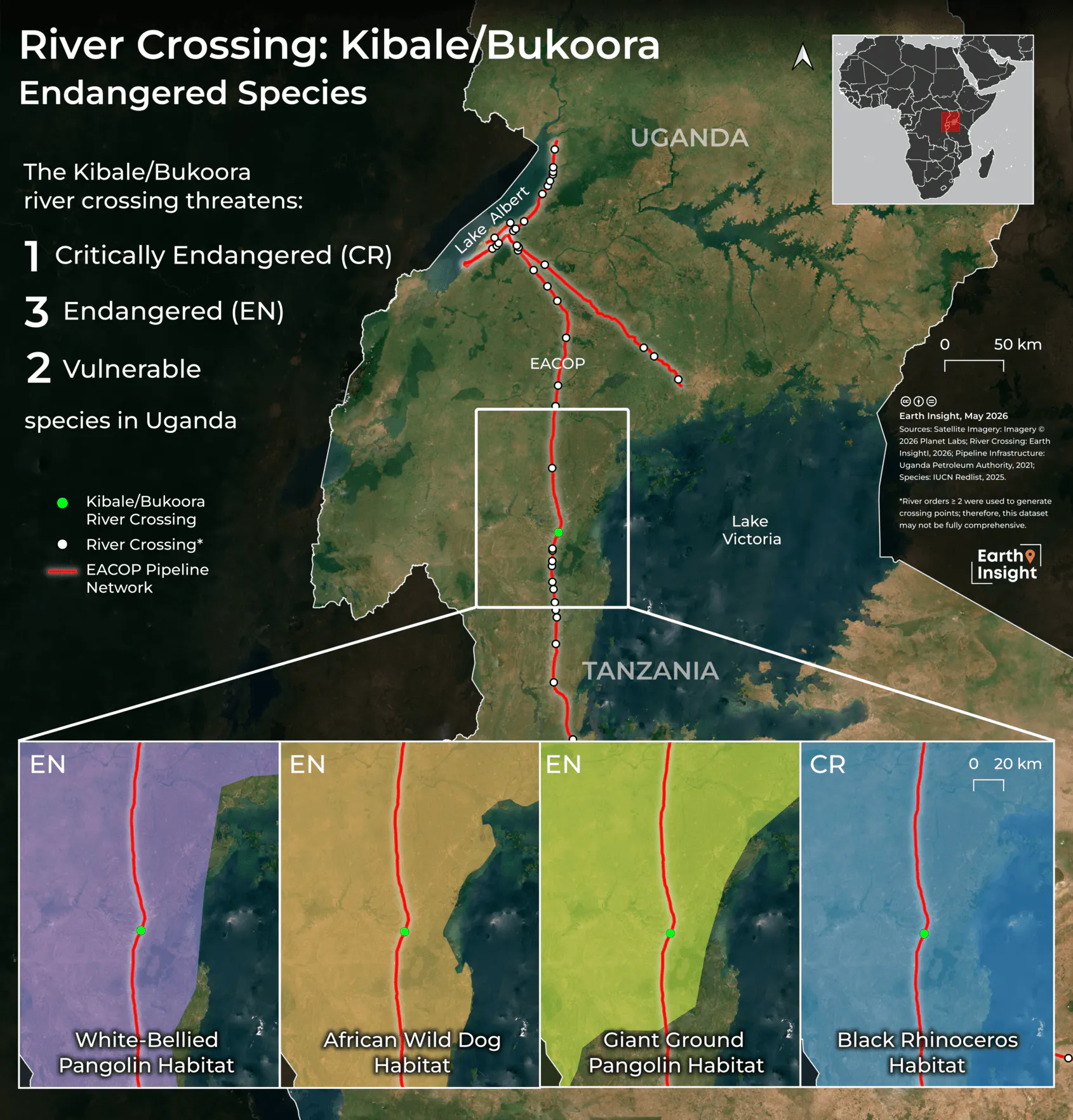
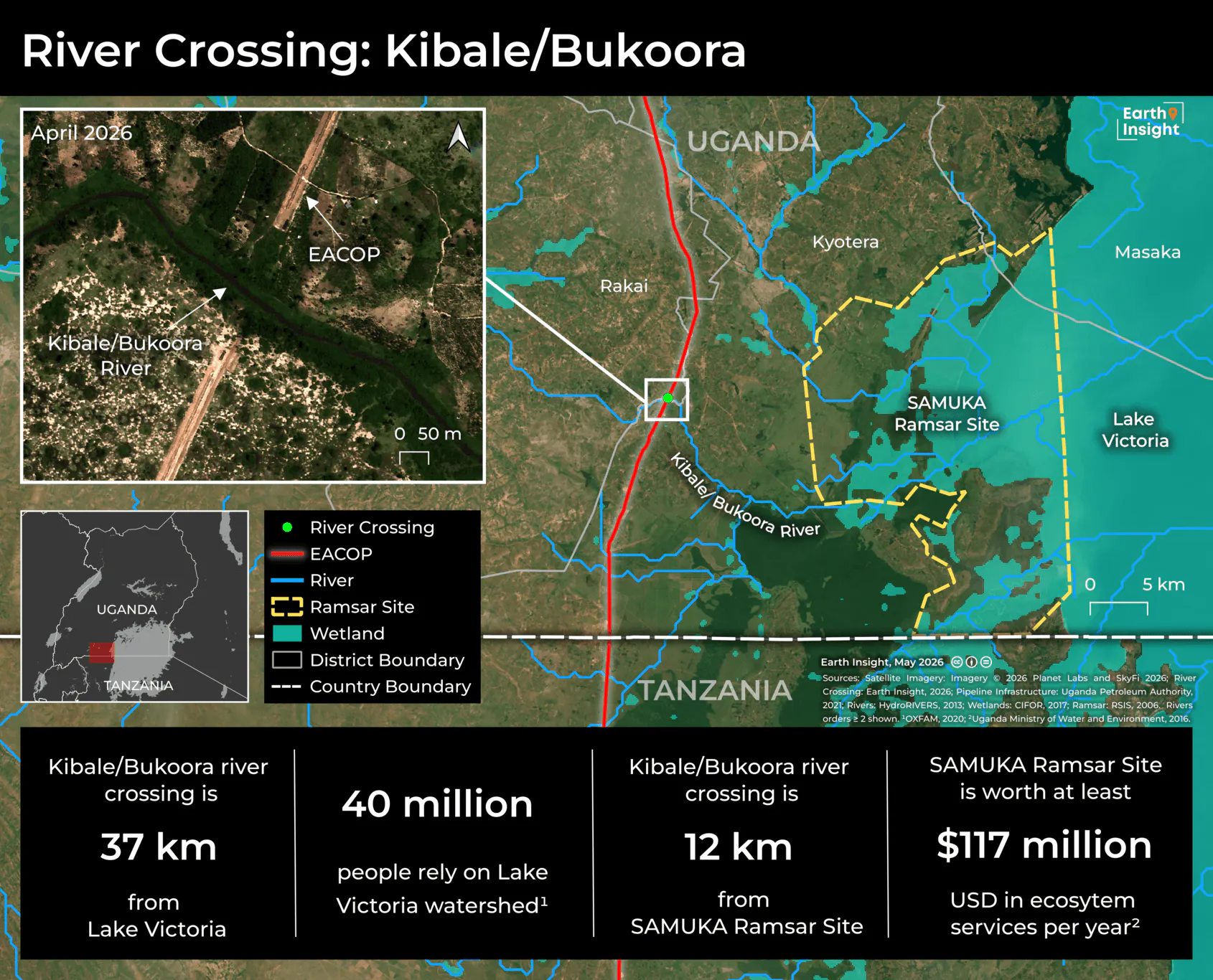
A third of the pipeline runs along Lake Victoria, where it crosses a river that feeds the SAMUKA Ramsar wetlands, before heading into Tanzania’s mangroves near the port of Tanga. Studies show pipelines that cross rivers are especially prone to erosion from floods, which increases the risk of oil spills. Analysis of the Kibale/Bukoora River Crossing shows overlaps with the habitats of the critically endangered black rhino, as well as endangered pangolins.
Transparency about the EACOP’s full life-cycle impact on interconnected cultures and ecosystems over the next 30 years and beyond can prevent irreversible, long-term harm.